
Robotic Colorectal & Hernia Surgery in Melbourne
Dr Suat Chin Ng is a female colorectal, hernia and general surgeon in Melbourne with a particular interest in minimally invasive surgery, including robotic-assisted colorectal and hernia surgery.
Dr Ng performs robotic surgery using the da Vinci Xi Surgical System, predominantly at Epworth Eastern Hospital in Box Hill. Her robotic practice is supported by advanced colorectal surgical training, further practical training and mentorship in robotic colorectal surgery, and advanced robotic surgery training at IRCAD in Strasbourg, France.
Robotic surgery is one of several surgical approaches available to patients. Dr Ng also performs laparoscopic and conventional open surgery, and the most appropriate approach is determined individually according to the patient's condition, anatomy, previous surgery, general health and circumstances.
What Is Robotic Surgery?
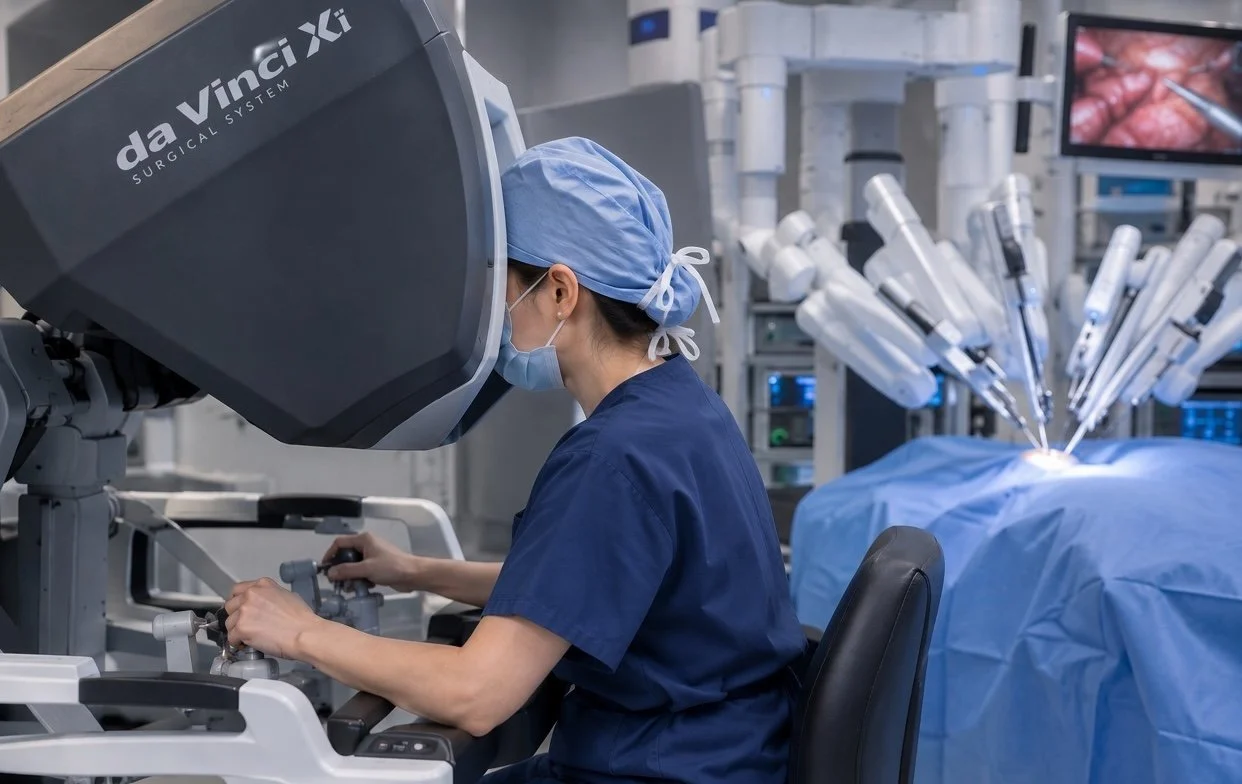
Robotic-assisted surgery is an advanced form of minimally invasive surgery performed through small incisions using a specialised robotic surgical system.
The robotic system does not operate independently. Dr Ng controls the surgical instruments throughout the procedure from the surgeon's console. The system provides a magnified three-dimensional view of the operating field and allows the use of specialised instruments with a greater range of movement than conventional straight laparoscopic instruments.
These features can be particularly useful during technically demanding procedures and surgery within confined anatomical spaces, including the pelvis.
Robotic surgery is a tool that supports the surgeon's surgical skills and judgement. It does not replace the surgeon, and it is not automatically the best approach for every patient or operation.
The da Vinci Xi Surgical System
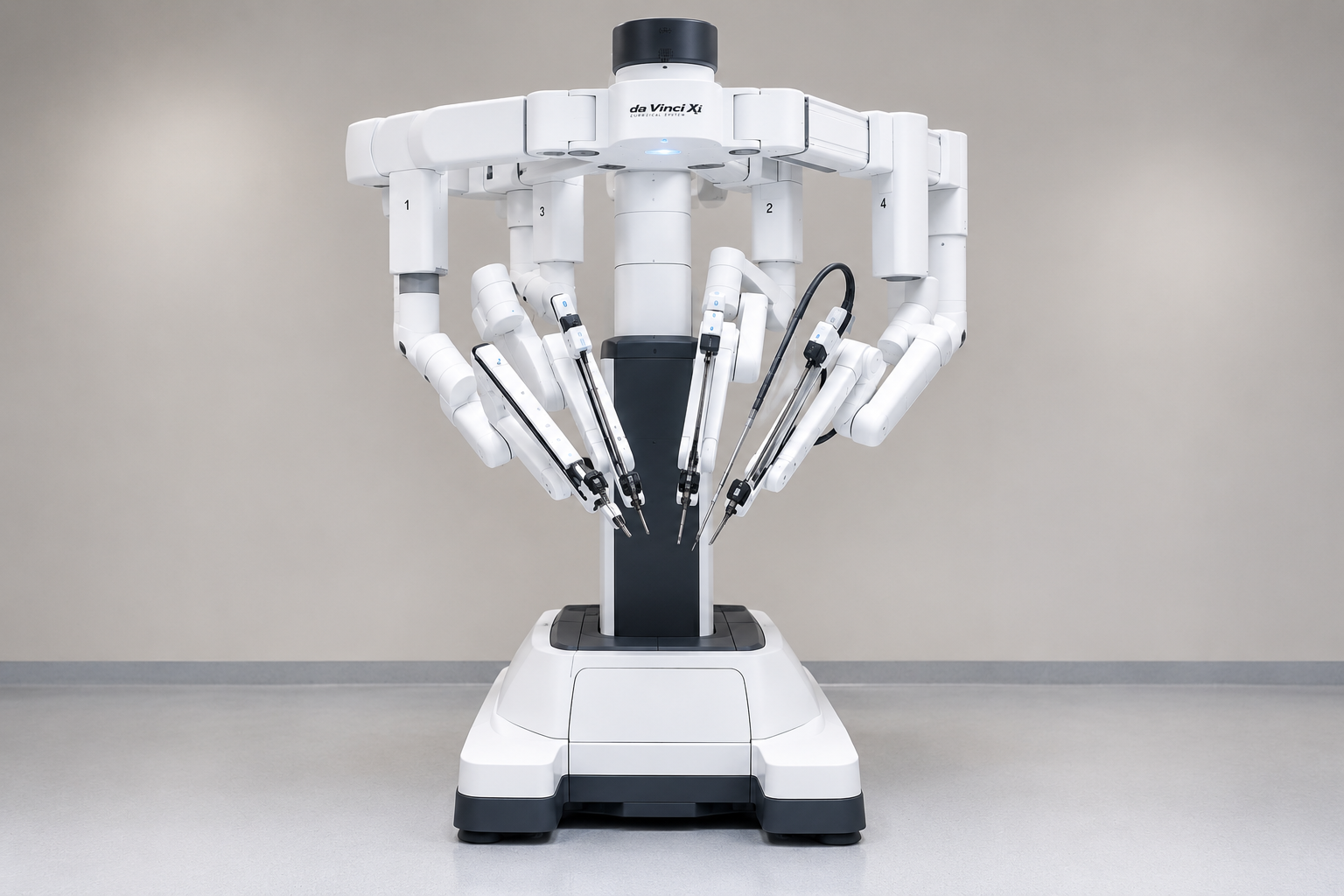
Dr Ng uses the da Vinci Xi Surgical System for selected robotic procedures.
The system combines high-definition three-dimensional visualisation with specialised articulated instruments that the surgeon controls directly. The instruments are designed to allow precise movements and access to areas that can be technically challenging to reach with conventional laparoscopic instruments.
For selected colorectal procedures, particularly those involving the pelvis, these capabilities may assist with detailed dissection and reconstruction.
The decision to use robotic surgery remains a clinical decision made by the surgeon in consultation with the patient.
Robotic Colorectal Surgery
Robotic-assisted surgery may be considered for selected conditions affecting the colon, rectum and pelvis.
Depending on the patient's diagnosis and individual circumstances, robotic colorectal surgery may be used for selected procedures for:
Colorectal cancer
Rectal cancer
Diverticular disease and diverticulitis
Selected benign colorectal conditions
Selected pelvic floor and rectal conditions
Other conditions requiring colorectal resection or reconstruction
The suitability of a robotic approach depends on a number of factors, including the location and complexity of the disease, the patient's anatomy, previous abdominal or pelvic surgery, general health and the anticipated risks and benefits of each surgical approach.
Robotic Hernia Surgery
Robotic-assisted surgery may also be an option for selected patients with abdominal wall or groin hernias.
Depending on the type and complexity of the hernia, robotic surgery may be considered for:
Inguinal hernia
Umbilical hernia
Ventral hernia
Incisional hernia
Selected recurrent hernias
Selected complex abdominal wall hernias
Dr Ng assesses each hernia individually, taking into consideration the patient's symptoms, hernia characteristics, previous surgery, abdominal wall anatomy, medical conditions and the potential risks and benefits of different surgical approaches. Not every hernia requires robotic surgery. Laparoscopic or open repair may be more appropriate in some circumstances.
Robotic Surgery Training & Practice at Epworth Eastern
Dr Ng undertook advanced colorectal surgical training in Australia and New Zealand, gaining experience in open, laparoscopic and robotic colorectal surgery. Following her colorectal fellowship training, she undertook further practical training and mentorship in robotic colorectal surgery at Epworth Eastern Hospital with Dr Phil Smart. She was subsequently awarded an Epworth Doctors grant to undertake an advanced robotic colorectal surgery course at IRCAD in Strasbourg, France.
Dr Ng currently performs selected robotic colorectal and hernia procedures using the da Vinci Xi Surgical System, predominantly at Epworth Eastern Hospital in Box Hill, Melbourne.
Her robotic practice forms part of her broader minimally invasive surgical practice. The suitability of robotic surgery depends on the patient’s diagnosis, anatomy, previous surgery, general health and individual circumstances. During consultation, Dr Ng will discuss whether robotic, laparoscopic or open surgery is the most appropriate approach.
Choosing the Most Appropriate Surgical Approach
Robotic surgery is not necessarily better than laparoscopic or open surgery for every patient. Each approach has potential advantages and limitations, and the safest and most appropriate technique depends on the individual patient and the operation being performed.
For appropriately selected patients, robotic surgery offers the benefits of a minimally invasive approach, together with additional technical capabilities such as:
Magnified three-dimensional visualisation
Enhanced instrument articulation and range of movement
Precise control of specialised surgical instruments
Improved access to selected confined anatomical spaces
Small incisions associated with a minimally invasive approach
The potential benefits vary according to the procedure and the individual patient. Robotic surgery does not eliminate the risks associated with surgery, and its potential benefits must be considered alongside the risks and alternatives.
When recommending a surgical approach, Dr Ng considers:
The diagnosis and complexity of the condition
The location of the disease
The patient’s anatomy and body habitus
Previous abdominal or pelvic surgery
General health and anaesthetic risk
The potential benefits and limitations of each approach
The expected complexity of the operation
The patient’s preferences and individual circumstances
During consultation, Dr Ng will review the patient’s symptoms, investigations, imaging, previous operations, medical history and individual anatomy. She will explain whether surgery is required and, where appropriate, discuss robotic, laparoscopic and open approaches, including their potential benefits, limitations, risks and expected recovery.
Robotic surgery is not appropriate for every patient or every operation. The final surgical approach is selected according to what is considered safest and most appropriate for the individual patient, rather than choosing a particular technique simply because it is technologically advanced.
Patients are encouraged to ask questions and take the time they need to understand their treatment options before making a decision.